Homilies

Our Atrophied Muscles of Charity and Repentance
Sunday, January 24, 2010
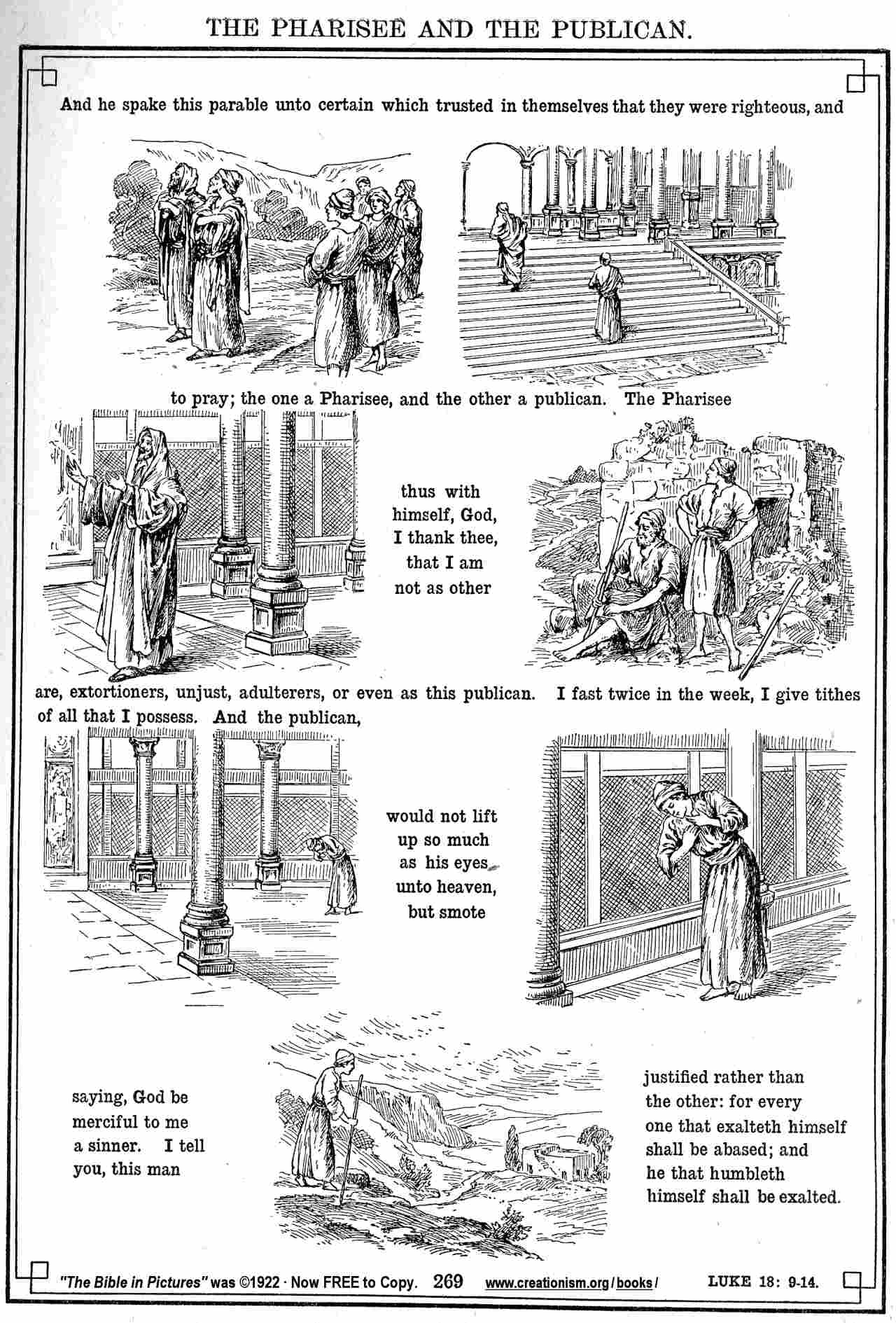
All humans, by dent of our fallen psychology, are tempted to be more like the Pharisee than the Publican. Scientists have proven that we are more critical towards others and far too charitable towards our own intentions than is generally warranted. This is the exact opposite of what Christianity teaches because it is the exact opposite of the kind of attitude and way of living that brings salvation and joy to people and communities.
Orthodoxy provides the tools that correct this automatic imbalance [– the imbalance] that leads us to forgive ourselves but condemn our neighbors; to be charitable about our own lives and motivations but judgmental towards the lives and motivations of others. They are powerful tools, and during the Great Lent that approaches, the Church will encourage us to use them all. These tools include fasting, sacrificial almsgiving, extra prostrations and prayers, and penitential services (like the Great Canon of St. Andrew of Crete). Because Orthodoxy was designed by an all-knowing, all-powerful, and all-loving God; it is the best way to draw us towards perfect unity with God and perfect community with one another. But only if we let it.
[You see,] We are so selfish and so proud of ourselves, that we can avoid the genuine parts of Orthodoxy that are designed to work beneath our skin and transform our hearts and minds. [So] Instead of bringing it into the center of ourselves where it was made to work, we can wear it on the outside, as a kind of outer garment, just like the Pharisees in the Gospels. When we do this, Orthodoxy becomes nothing more than a man-made religion; contemptible and self-serving. And because it is so strong, when Orthodoxy becomes a simple religion rather than a lesson in love, it becomes a great source of corruption in the lives of those who wear it in this way, and in all those people whom they influence.
Two examples before I conclude with a practical way to combat this within ourselves:
•Nikon’s reforms (17th Century). The reforms were well intended, and could have helped to move the Orthodox people of that time away from worshipping the rituals towards worshipping God through the rituals. They had turned liturgy into an idol rather than an icon. Nikon’s reforms may have helped to correct this dangerous attitude in the long run, but at the time, it only showed served to show how pharisetical many Orthodox of that time and place had become. The reaction of the ones who preferred the old ways was predictable – they were being asked to change what they believed to be true…. but you may be surprised to learn that most of the ones who supported the changes were no less guilty of idolatry! “At least I am not like that Old Believer…”
•A priest who serves well because he loves the smells and bells and to do everything correct and “by the book”; and the priest who serves well because this is how (in his humility) he best expresses his love for God and His people. While the Mysteries celebrated by both are valid for believers, I fear that one walked away “justified”, while the other did not.
I have given two examples, one from history, and one that describes a temptation that every bishop, priest, deacon, subdeacon, and cantor wrestles with; but I am sure a little bit of introspection would allow that it is something that you yourself – and our community – has struggled with at one time or another. I know that I do!
Because we seem to have so many rules, we really do have to be careful that we do not become as Orthodox what many of the Pharisees had become: self-righteous hypocrites who use religion as a tool of their own pride. Because of our fallen psychology and our (strong but often superficial) commitment to the Orthodox religion – this is a real danger for us.
As I have said, Lent will bring other tools, but let me give you one that you can begin to use today:
Bear the burdens of the weak. Find ways that you were to blame for things that go wrong– and plausible ways to excuse your neighbor. Is this an exaggeration? Perhaps, but we lift more weights than we need to so that we can lift things we need to with ease; we practice swimming farther than the race is long so that we can endure it with ease; why should it not be so when it comes to spirituality? We exercise our muscles of repentance and charity more than circumstances warrant so that we can endure real life with ease.
And I think it is safe to say that our muscles of repentance and charity are so weak and atrophied, that even the greatest weight we force them to endure is only a fraction of that which is truly warranted by objective circumstances.
Let us not say “at least I am not like that Publican”, but rather that which is much closer to the truth: “God have mercy on me, a sinner”.
The Publican and the Pharisee

As we head into Great Lent, we need to imitate the Publican’s tears and avoid the Pharisee’s pride. But pride is hardwired into our fallen psychology and our spiritual “muscles” are atrophied by a lifetime of sloth. This is going to take some serious exercising!
Picture: The parable in teaching pictures (NOT icons).