OrthoAnalytika

Are You Coming to the Feast
Sunday, December 28, 2008
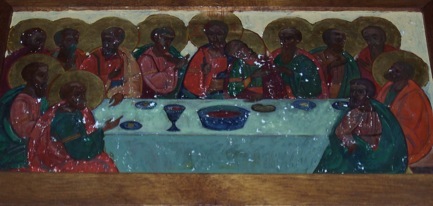
The Forefathers
Today is the second Sunday before the Nativity in the flesh of our Lord, God, and Savior Jesus Christ. On this Sunday, which we call “The Sunday of the Forefathers”, our hymns remind us of all those who came before the blessed Incarnation of God. We remember all the great Fathers and Mothers, starting with those who predate the Law, to include: Adam, Enoch, Noah, Melchizedek, Abraham, Sarah, Isaac, Rebecca, Jacob; as well as those who came after the law: to include Moses, Aaron, Joshua, [Deborah, Ruth,] Samuel, David, Isaiah, Jeremiah, Ezekiel, Daniel, [the three holy youths], and with them the twelve prophets [Hosea, Amos, Micah, Joel, Obidiah, Jonah, Nahum, Habakkuk, Zephaniah, Haggai, Zechariah, &Malachi], Elijah, Elisha, and all the rest; and concluding with Jesus’ immediate ancestors and contemporaries, Zachariah [ & Elizabeth], [Joachim, & Anna] (the four of whom adorn the back walls of our temple); Christ’s cousin, John the Forerunner & Baptist; and Christ’s Mother, Mary the Bohoroditsa.
Among these, special attention is paid to the Patriarch Abraham, to whom God said, “in thy seed shall all of the nations of the earth be blessed” (Genesis 22:18). While the immediate meaning of these words to Abraham dealt with the establishment of the Jews as the people of God; the greater “blessing” God is describing is the coming incarnation of His Son, Jesus Christ, which will also be effected through Abraham’s seed. The Jews were a “blessing” to the nations by their witness to the true God and their prophesies of the Messiah; but Christ the Messiah is the greatest “blessing” because through Him all nations could not only know of Christ, but also be redeemed through Him.
It is this greater meaning that allows St. Paul to say that those who confess Christ as their Savior and thereby become one in His Body – the Church – are no longer “Greek nor Jew, circumcised nor uncircumcised, barbarian, Scythian, slave nor free”. The Jews were set apart from all the other nations. The Jewish scriptures describe how they were contaminated and led astray when other peoples were allowed into their midst. But now the blood of Christ and His Glorious resurrection allow all who so desire to gather together in Him; and from within Him, to “make disciples of all the nations, baptizing them [also] in the name of the Father and of the Son and of the Holy Spirit” so that everyone (through Him and Him in us) can become partakers of His Divine Nature (2 St. Peter 1: 2-4).
The Banquet.
God worked through the forefathers to prepare the world for the Incarnation of Jesus Christ, so that through Him we all might be saved from an eternity of separation and sin. Thanks to them, He has come and laid the banquet before us: we have but to answer his call. We just have to answer his invitation to join him at his feast. He has sent his apostles out into the “highways and hedges” of this world – even to the Blackstone Valley of New England – so that we, too, may be fed, filled, and redeemed.
But who will come? Will you join Him at the feast?
Given the hunger in this world it is difficult to understand, but there are many who refuse this invitation. In the parable, it seems absurd that people would rather attend to mundane matters than feast with their Lord. But how much crazier is it for people to go about their lives in the normal manner here and now when Christ Himself is offering the only food that truly fills and the only drink that truly quenches? How can we just stand God up when He has prepared everything for us and our salvation? How can we dismiss Him so easily, so rudely?
The Holy Fathers teach us that the services and prayers of the Church are our best teachers. Among these, the Divine Liturgy is paramount; and the Anaphora is its most sacred section (anaphora means “carrying up” or offering; it is when the Holy Spirit comes down and brings about the change of the bread and wine into the Body and Blood of Christ). The first priestly Eucharistic prayer of the Anaphora (which is found in the red books in the pew, but not in the white ones, which do not include any of the priest’s prayers) makes clear what our attitude towards this invitation to salvation should be:
-
It is right, in truth, to sing to You, to bless You, to praise You, to thank You, and to worship You in all places of Your dominion; for You are God Ineffable, Inconceivable, Invisible, Incomprehensible, existing forever, ever the same – You and Your Only-begotten Son and Your Holy Spirit, You brought us out of nothing into being, and when we fell, You raised us up again and did not cease doing everything until You led us into Heaven and granted us Your Kingdom to come.
-
-
[For all these things we thank You and Your only begotten Son and Your Holy Spirit: for all things that we know and do not know, for blessings manifest and hidden that have been granted to us. We also thank You for this liturgy which you are please to accept from our hands, even though You are surrounded by thousands of Archangels, by tens of thousands of Angels, and by the Cherubim and Seraphim – six-winged, many-eyed – soaring aloft on their wings …]”
At the very moment the great Eucharistic banquet is being prepared, this prayer reminds us that the right way to respond to this feast is with thanksgiving and acknowledgement of God’s saving grace and His unceasing efforts to bring us into His Kingdom. At the end of this prayer, you all continue the praise that the priest began with these words:
-
Holy, Holy, Holy Lord of Sabaoth, Heaven and earth are filled with Your glory, Hosanna in the highest! Blessed is He Who comes in the name of the Lord. Hosanna in the highest!
“Hosanna” literally means “please save now”. For the forefathers, it was a plea that the Messiah would come quickly to deliver them. But the Messiah has now come – indeed He is still here – so the word “hosanna” has been transformed into a song of praise and adoration to God for the salvation He offers to us through His Son. The entire Divine Liturgy is devoted to this reality – in fact, the very word “Eucharist” means “Thanksgiving”. And while we have many blessings, it is God’s gift of His Son that is – or at least should be – the thing for which we are most grateful.
The Invitation
Are you grateful for this gift of salvation through Jesus Christ? If so, do not spurn the invitation to the celebratory feast! The Lord is inviting you now to accept His salvific grace; to be freed from your sin, to be granted life in abundance, and to feast with the saints and angels in His loving presence.
He is calling you now. You may indeed be busy, but I seriously doubt that you can honestly and rationally say that you have something better to do. Say “yes” to Christ now; and reaffirm that choice henceforth through your every action and decision; strengthen it through your prayer, love of neighbor, evangelism, and fellowship with His people. Your decision will then become less a point in time, or even a series of points, but points transformed into an integral of sanctification leading you towards an eternity of bliss.
In the name of the Father, and of the Son, and of the Holy Spirit. Amen.
2nd Sunday before the Nativity
Christ has prepared the banquet... but who will come? Will you?